
The Vaccine War: A Cinematic Battle of Narratives and National Identity

I finally managed to catch one of the most talked-about movies for last few months , “The Vaccine War,” by Vivek Agnihotri, the creative mind behind “The Kashmir Files.” This film is not just another cinematic experience; it’s a cultural artifact that challenges our preconceived notions and invites us to reimagine what’s possible for a nation.

The storytelling techniques employed in the movie simplify complex scientific events, making them relatable and understandable to a broad audience. While the film does have its share of cliché dialogues and dramatic moments, these elements serve a purpose. They amplify the emotional resonance, making its core message of hope and resilience even more impactful.

One dialogue that stands out is: “When the world says we can’t, that’s when we show them we can.” This line encapsulates the essence of the movie and serves as a rallying cry for nations striving to break free from limiting perspectives.

What “The Vaccine War” achieves is monumental. It not only entertains but educates and inspires, reminding us that the journey from skepticism to confidence is one that requires vision, leadership, and the audacity to dream big. It’s a testament to the power of cinema to not just reflect reality but to shape it, by altering perceptions and inspiring action.

So if you’re in the mood for a film that offers more than just escapism, give “The Vaccine War” a watch. It’s a cinematic experience that will leave you pondering long after the credits roll, challenging you to break your own perspectives and believe in the boundless capabilities that lie within us as a nation.

From Uncertainty to Unshakeable Confidence: My Personal Experience in a Strong Company Culture!

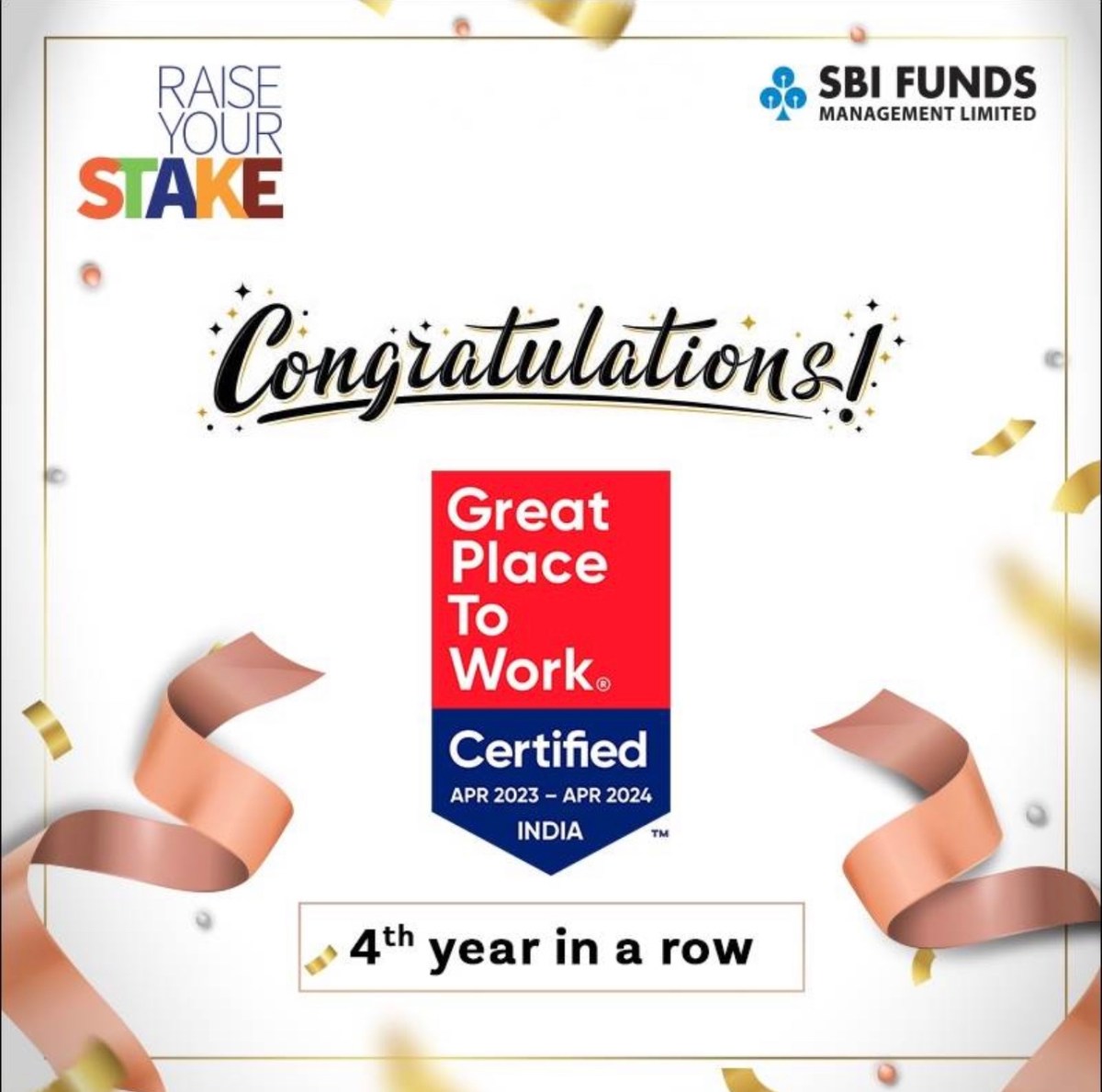
Last week, as I celebrated my 22nd anniversary at SBI Funds, our company was honored as the best place to work for the 4th consecutive time. This milestone is a testament to the incredible journey we’ve undertaken, transforming ourselves into a thriving organization with a successful culture.

Our promoters, SBI and Amundi, have always instilled confidence in the external world, but it is our success that has truly empowered our internal team. Through the highs and lows, our unwavering commitment to long-term vision has been the driving force behind our growth.

Despite experiencing losses in the initial years, the company’s focus was not on reducing expenses but on making significant investments in our talent pool, which has proven to be a forward-thinking strategy critical in shaping our future.

Our alignment of employee objectives with our investors and partners has created a win-win situation. We’ve always prioritized the long game over shortcuts, which has fostered a culture of trust and collaboration.

During a challenging period 15 years ago, we doubled down on talent through strategic intervention, and there has been no turning back since. Our successive CEOs, group chairmen, and board of directors have skillfully steered the company to its current success. Today, we are not only market leaders in India, but we also rank among the world’s top asset managers.

A few years ago, we asked our employees to revisit our vision and mission. The result was a more streamlined vision: “To be the most trusted and respected Asset Manager,” encompassing all our core principles. We also established the acronym STAKE, representing Service, Transparency, Accountability, Knowledge, and Ethics, to guide us in staying true to our beliefs.

As Brian Chesky, Co-Founder and CEO of Airbnb, once said, “Culture is simply a shared way of doing something with a passion.” This quote perfectly captures the essence of our company’s progress.

Having spent nearly 3/4 of my professional career at SBI Funds, I am more confident than ever in our ability to shape the financial future of India and share our success story with the world. We are not just a business; we are a service and a commitment to our clients.

As we continue on this incredible journey, I look forward to witnessing the growth, success, and confidence that our company will inspire in the years to come.

The Exploitation of User-Generated Content: A Brief History of Tech Companies from Geocities to Chat GPT

The internet has transformed our world in countless ways, from how we connect with others to how we consume media. At the heart of this transformation is user-generated content, the vast array of information, images, and videos that we create and share online. However, as tech companies have harnessed the power of this content to build their businesses, concerns about privacy, ownership, and control have grown. let’s explore the history of tech companies exploiting user-generated content and the implications of this practice.

From the early days of Geocities and search engines like Google to the rise of social media platforms like Facebook and Twitter, tech companies have used user-generated content to build valuable products and services. However, these companies have also monetized our data, using our likes, shares, and comments to build detailed profiles of us for advertisers. Instagram and TikTok continued this trend, creating platforms around user-generated content that could be leveraged for advertising purposes.

The latest iteration of this trend is the rise of GPT (Generative Pre-trained Transformer) platforms like OpenAI’s Chat GPT. These platforms use machine learning to generate human-like text, often by training on vast amounts of user-generated content. While these platforms have incredible potential, they also raise concerns about privacy, ownership, and the potential for misuse.

So, what can we do to address these concerns? As this talk on YouTube video “The A.I. Dilemma” points out, “We need to put in place policies and regulations that ensure that data is used for public benefit, not just for private gain.” This means demanding greater transparency and control over our data and engaging in debates about the ethical and societal implications of AI and user-generated content. Governments and regulatory bodies also have a role to play in ensuring that A.I. is used for the public good, not just for private profit.

The history of tech companies exploiting user-generated content is a reminder that our content is a valuable resource for these companies, but also that it has the potential to shape the world in ways that we may not anticipate. As we continue to create and share content online, we must remain vigilant about how our data is used and advocate for greater transparency and control over our online lives. Only by being aware of these issues and working together to create policies and regulations can we ensure that the power of user-generated content is harnessed for the greater good, not just for the profit of tech companies.

See this video on Youtube “The A.I. Dilemma” to learn more about the challenges and opportunities of AI and user-generated content in our world.

India Outpopulates China: The Unexpected Benefits of a Booming Nation

When my daughter turned 17 yesterday, it got me thinking about the world she’s growing up in and the opportunities that lie ahead for her. Coincidentally, last week India surpassed China as the most populous country in the world, and it struck me that this could be a turning point for the nation. While we’ve spent decades worrying about controlling population growth, it’s time to look at the bright side and embrace the silver lining that comes with this milestone. But we must also acknowledge the responsibility that comes with these numbers, as millions of Indians still live in poverty.

I still remember the days when my parents warned me about the perils of overpopulation, and it was drilled into our generation that population control was crucial for our nation’s survival. But as I watched my daughter blow out her birthday candles, I couldn’t help but feel optimistic about her future in a country that’s now the world’s most populous. So, what changed?

So, what changed?

  1. Demographic Dividend: India’s young population can lead to economic growth and prosperity. With a median age of 28.4 years, India has a huge working-age population that can fuel productivity and innovation.
  2. China’s Aging Population: China is now facing the consequences of its one-child policy, resulting in a shrinking workforce and an ageing population. India’s growing population, on the other hand, ensures a steady supply of human capital.
  3. Urbanization: India’s population surge is accompanied by rapid urbanization. This creates opportunities for infrastructure development and smart city initiatives, potentially improving the quality of life for millions.
  4. Geopolitics: India’s growing population gives it a stronger bargaining position on the global stage. With a larger market and increased influence, India can play a more significant role in shaping international policies and decisions.
  5. Innovation: A larger population can lead to a more diverse and innovative workforce. With more minds working on the challenges of the future, India has the potential to become a hotbed of innovation and technological advancements.

From a geopolitical standpoint, India’s population growth can be seen as a strategic advantage. As China’s economy slows down, India has the opportunity to position itself as the next global powerhouse. Moreover, India’s rich cultural diversity and history can be leveraged to promote its soft power on the world stage.

Uttar Pradesh, India’s most populous state, has a population of over 200 million. If it were a country, it would be the 5th most populous in the world!

India’s population growth presents hope and opportunity, but we must acknowledge our responsibility to help millions break free from poverty. For my daughter and millions of young Indians, the future looks brighter if we come together to create a more equitable and prosperous nation. The Indian government is harnessing this strength and working towards building an Atmanirbhar Bharat (self-reliant India) through initiatives that promote domestic manufacturing, skill development, and entrepreneurship. By transforming population growth into a force for good, we can make India a shining example of self-reliance and progress on the world stage.